
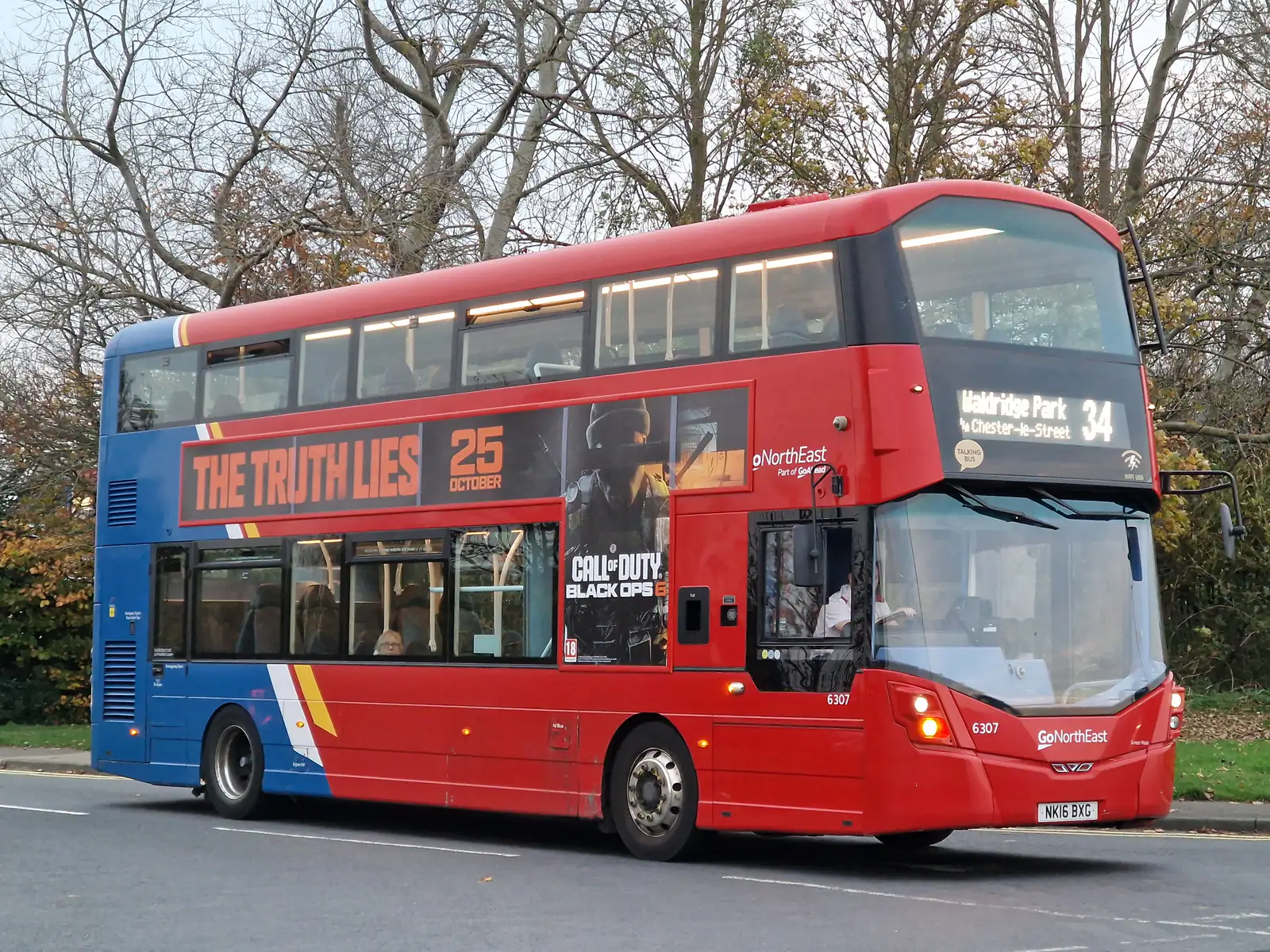
In 2021 Bridgestone Europe subscribed to Tyre Analytics to quantify the fuel savings from switching city buses from the previous-generation Bridgestone U-AP 001 to the new U-AP 002. Dynamon loaded high-resolution historical operating data for Go North East buses in Newcastle, then trained Bridgestone staff to model the tyre choice themselves, on the duty cycle those buses already ran.
In partnership with


Key outcomes
- Around 50 buses operated by Go North East in Newcastle, including 12 m and 18 m vehicles, were modelled from historical operating data.
- U-AP 002 gave Bridgestone a way to demonstrate its fuel benefit on a real urban stop-start duty cycle.
- In-house analysis meant Bridgestone staff could model tyre choices across vehicles, groups and the whole fleet.
The challenge
Bridgestone Europe, headquartered in Zaventem, Belgium, manages tyre operations across Europe, the Middle East and Africa. In 2021 it subscribed to Tyre Analytics to quantify the fuel savings from switching city buses from the previous-generation Bridgestone U-AP 001 to the new U-AP 002.
The buses run an urban stop-start duty cycle, and Bridgestone needed that fuel effect modelled from high-resolution historical operating data for vehicles already in service. It also needed its own staff able to model tyre choices across vehicles, groups and the whole fleet.
The fleet
Go North East connects the region’s towns and villages with the cities of Newcastle, Durham and Sunderland. It operates buses and coaches across Northumberland, Tyne and Wear, County Durham and into Tees Valley, and is part of the Newcastle-based Go-Ahead Group. This study used historical operating data for around 50 of its city buses in Newcastle, including 12 m and 18 m vehicles.
The approach
Dynamon loaded high-resolution historical operating data for the Go North East buses, then trained and supported Bridgestone staff.
Tyre Analytics models the energy each vehicle uses second by second — aerodynamic drag, tyre rolling resistance, acceleration, hill climbing, and engine and auxiliary losses — from telematics, vehicle configuration and tyre fitment data. That lets it predict how a change of tyre policy would affect fuel consumption and total cost in the fleet’s own operation.
What the analysis showed
Bridgestone gained a way to demonstrate the fuel benefit of U-AP 002 on a real urban stop-start duty cycle. The analysis drew on high-resolution historical operating data for around 50 Go North East city buses in Newcastle, including 12 m and 18 m vehicles, and on the duty cycle those buses already ran.
Dynamon then trained and supported Bridgestone staff to model tyre choices across vehicles, groups and the whole fleet themselves.