
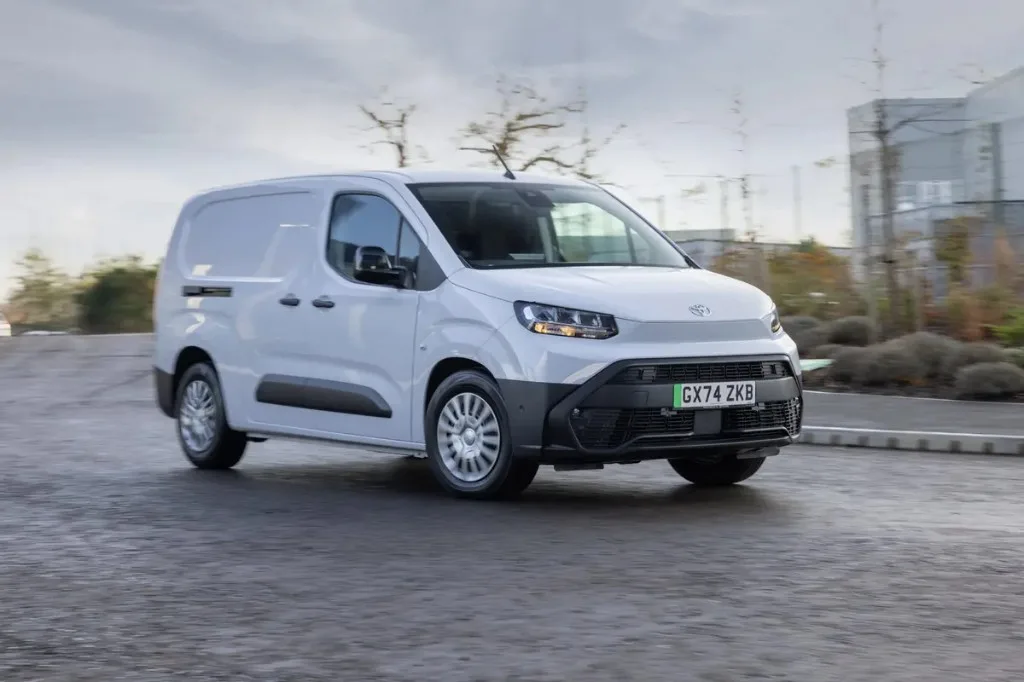
Bristow & Sutor’s cars and vans are taken home by the people who drive them. The work runs across the UK from a base in Redditch, so a depot charger would miss most of the fleet overnight. With Toyota, Dynamon used ZERO to test which electric cars and medium panel vans could cover those days on a 7 kW charger at home, and where a short top-up on the public network would still be needed.
Customer

Partner

Key outcomes
- 766,873 miles of telematics from 31 March to 30 June 2025. 146 of 160 vehicles had driving data, about 57 driving days each.
- About 91% of car journeys. A Toyota Urban Cruiser with a 61 kWh battery and 7 kW home charging, against an average day of 88 miles.
- The larger van battery added about 11 points. A 50 kWh Toyota Proace City completed about 78% of van journeys. The 75 kWh version completed about 89%. Vans averaged about 100 miles a day.
What ZERO showed
The fleet in the study is 75 cars and 85 medium panel vans. ZERO replayed the recorded days in harsh conditions and compared the Toyota vehicles Bristow & Sutor asked to model: an Urban Cruiser for the cars, and a Proace City at two battery sizes for the vans. Seventy of the cars and 71 of the vans had telematics.
A 7 kW charger where the vehicle already parks overnight is enough time to put a day’s energy back, because the vehicles are home at the end of the shift. The cars are the clearer move. The vans cover more miles, so the larger battery completes more of their days. The journeys that still fall short need only a short stop on the public network, not a depot. That is the specification for the partnership: which Toyota vehicles to bring in, and that charging belongs at home first.
Three months of home-based telematics, one Toyota car and two van batteries, tested on 7 kW home charging: that is what Dynamon and Toyota prepared so Bristow & Sutor can phase electric vehicles into a fleet that does not come back to a depot overnight.