
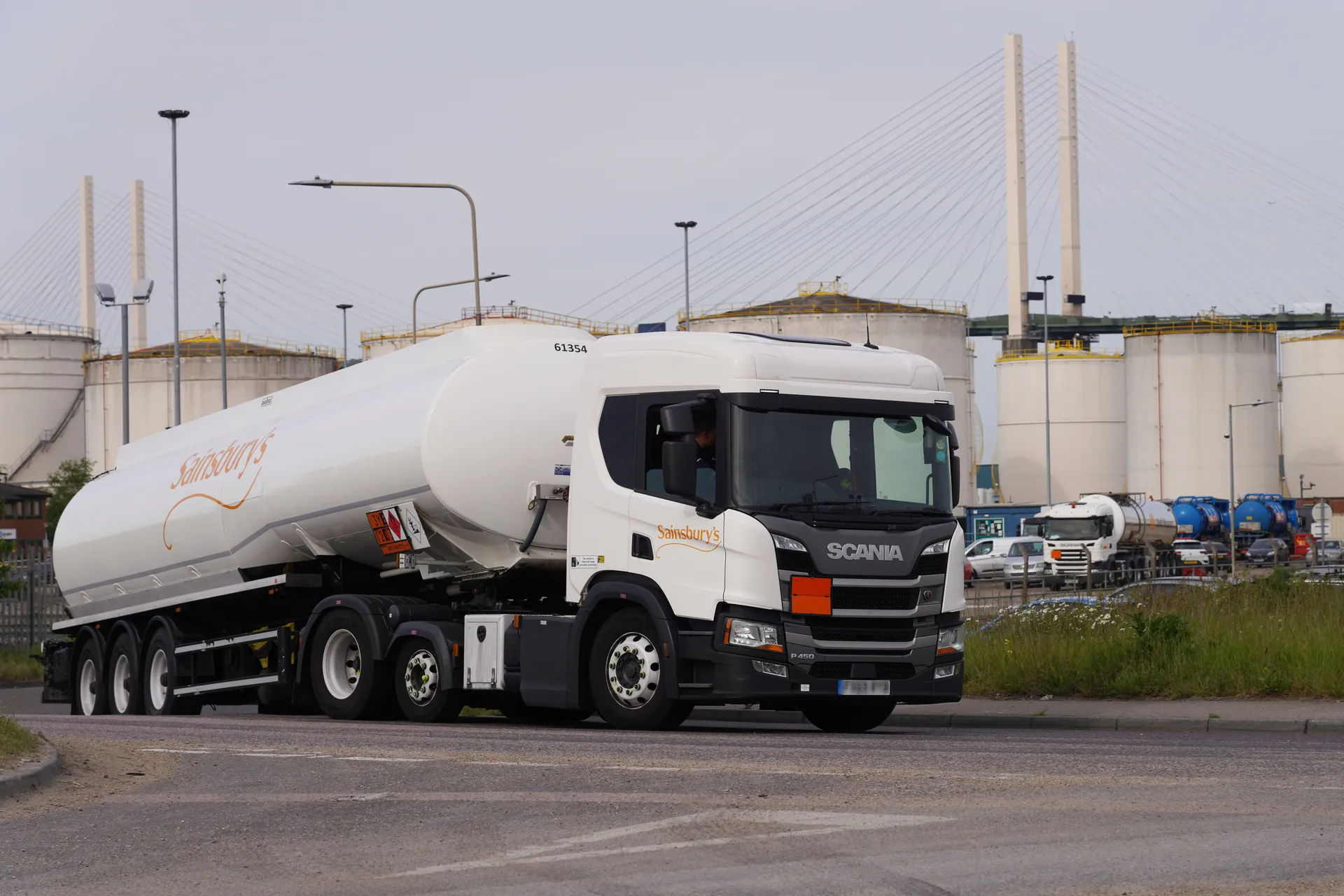
In 2019–20 Sainsbury’s was reviewing the tyre policy on its fuel tanker fleet, and wanted the lowest total cost of ownership rather than the cheapest pence-per-kilometre rate. Michelin commissioned Dynamon to forecast, for that operation, the fuel consumption of each of its fuel-efficient tyre policies. The forecasts were produced in Tyre Analytics.
In partnership with


Key outcomes
- In 2019–20 Sainsbury’s reviewed the tyre policy on its articulated fuel tanker fleet, and Michelin commissioned forecasts for that operation.
- Operation-specific forecasts set out the fuel consumption of each of Michelin’s fuel-efficient tyre policies, using this fleet’s telematics and vehicle data.
- Independent evidence gave Michelin a basis to present Sainsbury’s with the fuel and total-cost performance of each proposed policy.
The challenge
Sainsbury’s was reviewing the tyre policy on its fuel tanker fleet, made up of articulated tractor units pulling tanker trailers. It wanted the policy that balanced tyre cost against real-world fuel performance to give the lowest total cost of ownership, rather than the cheapest pence-per-kilometre rate. That called for fuel forecasts built for this operation. Michelin commissioned Dynamon to forecast the fuel consumption of each of its fuel-efficient tyre policies on the Sainsbury’s tanker fleet, so fuel cost could be weighed against tyre cost.
The fleet
Sainsbury’s is the United Kingdom’s second largest grocer, serving customers online and in supermarkets and convenience stores across the country. The vehicles in this study were the articulated tractor units and tanker trailers of its fuel tanker fleet, whose tyre policy was under review in 2019–20. Michelin, a tyre manufacturer headquartered in Clermont-Ferrand, France, commissioned forecasts of its proposed tyre policies for that operation.
The approach
Dynamon built a baseline from the tyres fitted at the time and from the fleet’s telematics and vehicle data.
Tyre Analytics models the energy each vehicle uses second by second — aerodynamic drag, tyre rolling resistance, acceleration, hill climbing, and engine and auxiliary losses — from telematics, vehicle configuration and tyre fitment data. That lets it predict how a change of tyre policy would affect fuel consumption and total cost in the fleet’s own operation.
What the analysis showed
The analysis gave Michelin independent, operation-specific evidence of the fuel consumption of each of its fuel-efficient tyre policies on the Sainsbury’s tanker fleet, and of the total-cost performance of those policies once fuel was weighed against tyre cost. The forecasts were built from the tyres fitted at the time and from this fleet’s telematics and vehicle data, so they described the Sainsbury’s operation itself. Michelin could present that evidence as Sainsbury’s reviewed its tyre policy.