
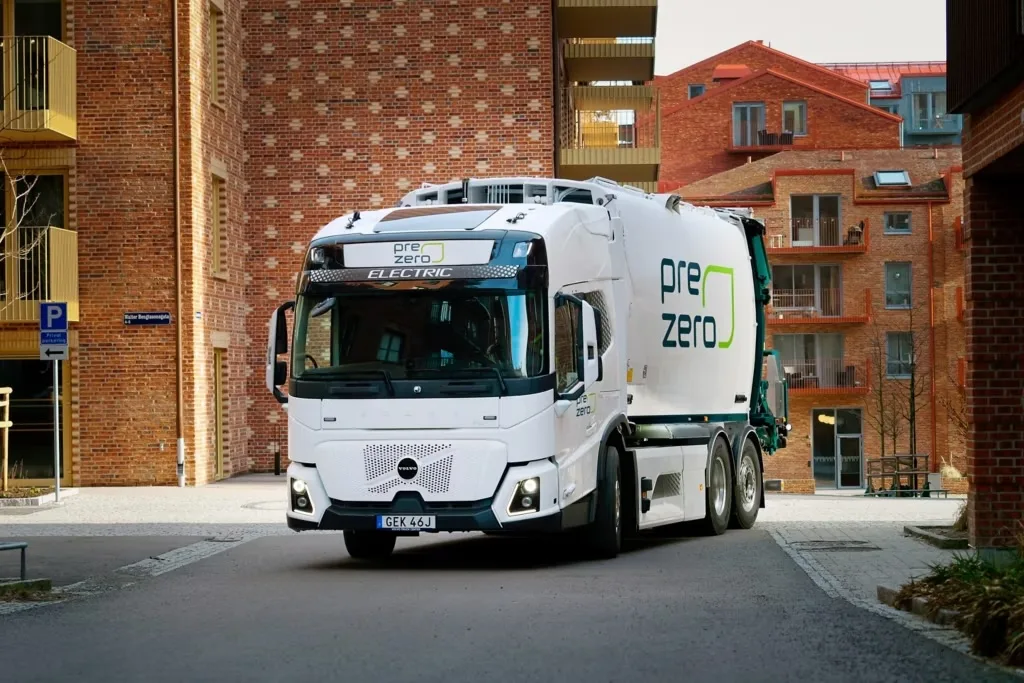
PreZero needed a practical view of how electric refuse collection vehicles could take on work from its depot at Aue, in Germany. Commissioned in partnership with Aral pulse, Dynamon used ZERO to replay ten months of telematics, compare battery sizes against those duty cycles — including the power drawn by the vehicle body — and set out charging at the depot together with charging on the Aral pulse network. The findings inform PreZero’s procurement strategy for electric refuse collection vehicles.
Customer

Key outcomes
- 363,731 km of Couplink telematics from the Aue depot, covering 2,412 duty cycles between 27 March 2023 and 10 January 2024.
- Body equipment included through a 20 kW auxiliary load, so the battery had to cover compaction and bin lifts, not the drivetrain alone, plus the stem mileage out to each collection zone.
- All 15 vehicles in the analysis were suitable for electric at their next replacement, with 95.6% of recorded journeys completed when charging was in place.
- 1% lower annual cost to run all 15 as electric rather than diesel, on a nine-year comparison. Seven vehicles are cheaper as electric, and six sit within 10% of the diesel cost.
The challenge
A refuse collection vehicle cannot be specified from a standard range figure. The working day includes a stem mileage from the depot to the collection zone, then long periods at low speed while the compactor and bin lifts draw power. Vehicles leave empty and return full, and they park overnight at the depot. The battery, and the chargers, have to follow that pattern.
PreZero and Aral pulse needed that picture for Aue, taken from the rounds the depot already runs, before vehicles or infrastructure are specified.
The approach
Dynamon registered the Aue depot and analysed the fleet through its Couplink telematics. The record ran from 27 March 2023 to 10 January 2024, sampled about every 31 seconds: 17 vehicles on the system, 15 with enough data to model, 2,412 duty cycles and 363,731 km. Two vehicles were left out of the final analysis because the telematics were missing or too short.
In ZERO, those duty cycles were replayed as electric. Three refuse-collection battery sizes were compared — a 450 kWh Mercedes-Benz Econic, a 288 kWh Volvo FM and a 237.6 kWh Scania — with smaller rigid options for the lighter vehicles. The model assumed a 50% payload, vehicles leaving the depot empty and returning full, and a 20 kW auxiliary load for the body equipment. Stem mileage stayed inside the recorded journeys, so each battery had to cover the trip to the collection zone as well as the round itself.
Charging was modelled overnight at Aue, where the vehicles already park, and on the move on the Aral pulse network. At the depot, ZERO compared 22 kW AC, 50 kW DC and 150 kW DC against the existing 180 kW site fuse and an 87 kW peak base load. The same operating record fed a nine-year total cost of ownership comparison, on a 500,000 km life and a 25% residual value.
The results
Every one of the 15 vehicles was suitable for electric at its next replacement. With charging in place, modelled journey completion across the fleet was 95.6%. The 450 kWh Econic completed about 96% of driving days for most of the fleet on 50 kW depot charging. Raising charger power to 150 kW changed that result very little, because the vehicles already spend a long time on site — about 16 hours 21 minutes on an average stop. One vehicle fitted a 288 kWh Volvo FM more closely. Two lighter vehicles suited a 280 kWh Volvo FL, still above 85% journey completion.
An unmanaged depot layout, with a charger for every vehicle, needed a 601 kW increase to the site fuse. A fully managed approach — moving vehicles between chargers, or an equivalent smart network — covered the same 15 vehicles with one 50 kW charger and two 150 kW chargers, and a 202 kW increase to the fuse. Charging falls overnight, roughly 16:00 to 02:30. A typical day needs 4,275 kWh, a heavy day 5,242 kWh, and the peak day in the record 6,046 kWh.
Over nine years, seven vehicles were cheaper as electric and six were within 10% of the diesel cost. Electrifying all 15 was about 1% cheaper per year than keeping the diesel fleet.
The study gives PreZero a depot-level basis for procurement: which of these vehicles to electrify at replacement, which battery sizes fit the recorded rounds, and what charging Aue needs before those vehicles are specified. Those findings inform PreZero’s wider strategy for electric refuse collection vehicles.
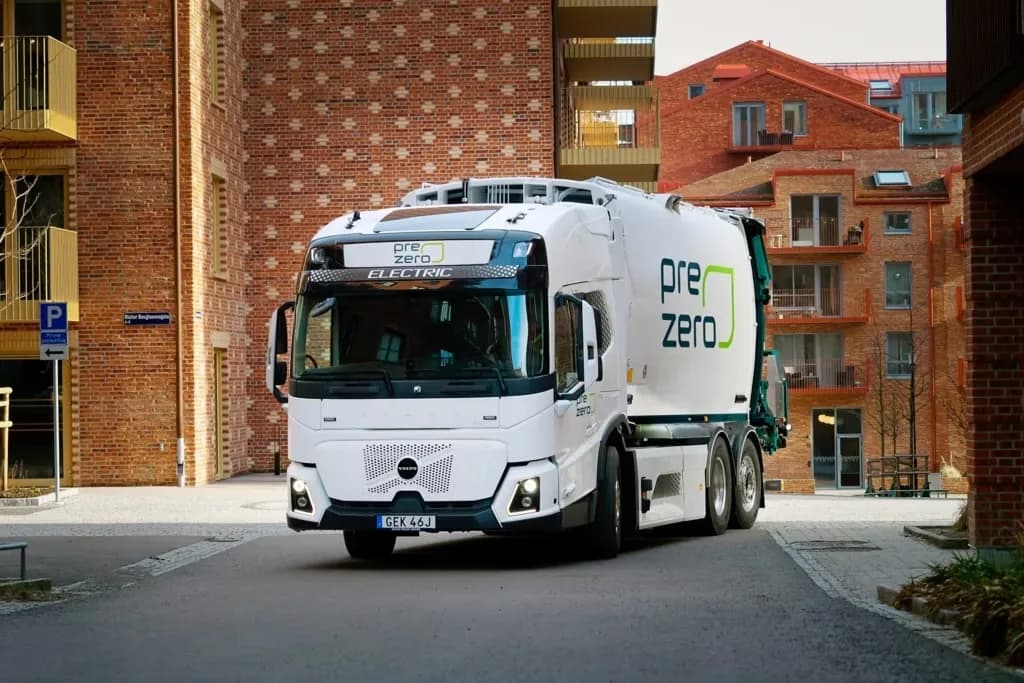
Ten months of refuse-collection telematics, battery options that included the body load and the stem mileage, a depot charging design, and a cost comparison: that is what Dynamon and Aral pulse prepared to inform PreZero’s procurement of electric refuse vehicles.