
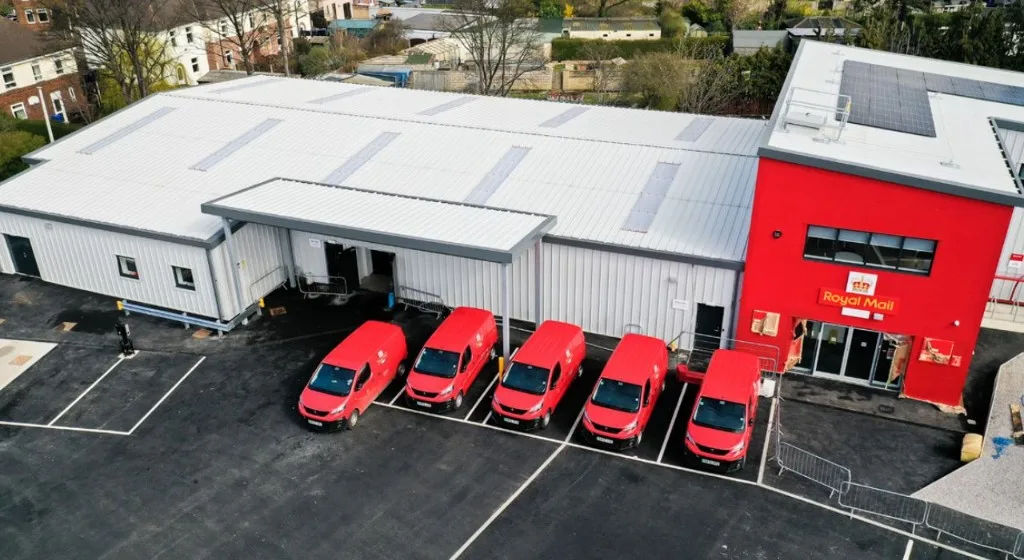
How Dynamon helped Royal Mail build an electrification plan for its last-mile van delivery fleet. Using historical Trimble telematics in ZERO, Dynamon’s decarbonisation analysis team assessed diesel operations at Enniskillen in Northern Ireland and Sheffield, tested market-ready electric van options, and designed cost-effective charging infrastructure for both depots.
In partnership with


Key outcomes
- Sheffield — 98% of duty cycles completed with a 7 kW depot charger; raising power to 22 kW made virtually no difference.
- Enniskillen — 88% of duty cycles completed at 7 kW; incomplete days were driven by occasional long journeys, not a lack of dwell time.
- Right-sized infrastructure — significantly fewer charge points than vehicles, using an optimised charging schedule to cut peak grid demand and capital spend.
- Public charging for exceptions — rare longer journeys further from base can be covered by public charging rather than over-specifying depot infrastructure.
The challenge
Royal Mail needed a clear electrification plan for last-mile van operations at two depots — Enniskillen in Northern Ireland and Sheffield — before committing to vehicles and charging infrastructure.
Last-mile delivery is dense, repeatable work close to base, but depots also see occasional longer journeys. Without evidence from real operations, it is easy to over-specify charger power, install one charger per vehicle, and inflate grid connection costs.
The questions were practical: which electric vans could replace diesel duty cycles, whether higher-power depot charging was worth the investment, how many charge points were actually required, and what peak grid demand charging would create on site.
The approach
Historical telematics data was collected from Royal Mail’s telematics provider, Trimble, and uploaded into ZERO — Dynamon’s whole-fleet decarbonisation analysis and planning software.
Dynamon’s decarbonisation analysis team used that data to understand how the diesel fleet operated day to day, then ran vehicle feasibility studies against market-ready electric options — including the Citroën e-Dispatch 75 kWh — at both depots.
The analysis compared 7 kW and 22 kW depot charging, mapped incomplete duty cycles back to journey patterns, and designed depot infrastructure: the number of charge points required, an optimised charging schedule, and the resulting grid demand.

Enniskillen and Sheffield operations
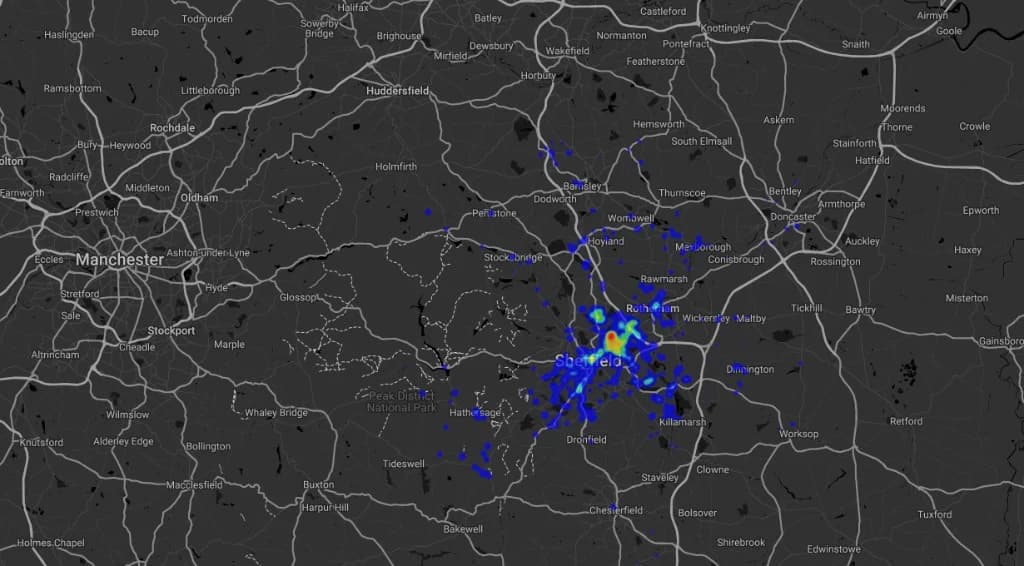
ZERO mapped telematics activity for both depots. Sheffield’s heat map shows a classic last-mile pattern: dense delivery activity concentrated on the city and immediate surrounds, with only sparse trails for rarer longer journeys.
That concentrated operating radius, combined with strong depot dwell, made Sheffield a strong candidate for overnight depot charging on modest AC power.
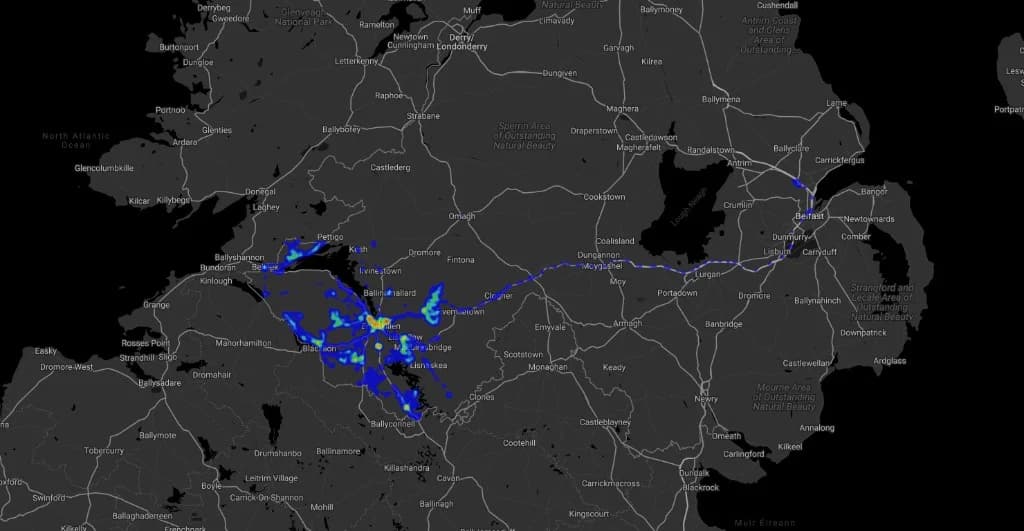
Enniskillen’s operation is centred on the depot in south-west Northern Ireland, with local delivery webs around the town and occasional long routes east towards Belfast. Those exceptional journeys — not everyday last-mile work — were the main source of incomplete electric duty cycles.
Site-specific telematics made the difference clear: both depots had enough dwell for practical electrification, but their residual feasibility gaps came from geography, not from charger power.
Vehicle feasibility: 7 kW vs 22 kW
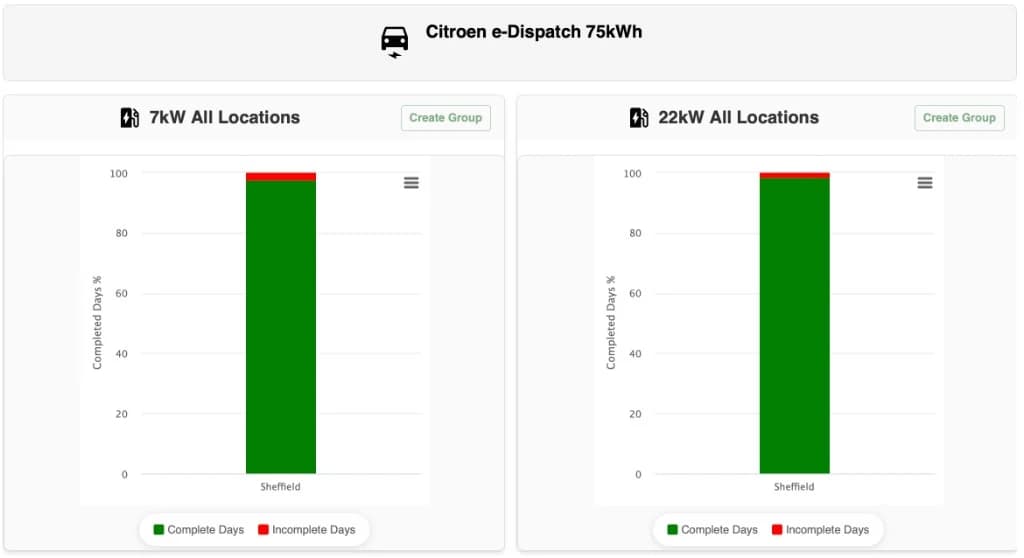
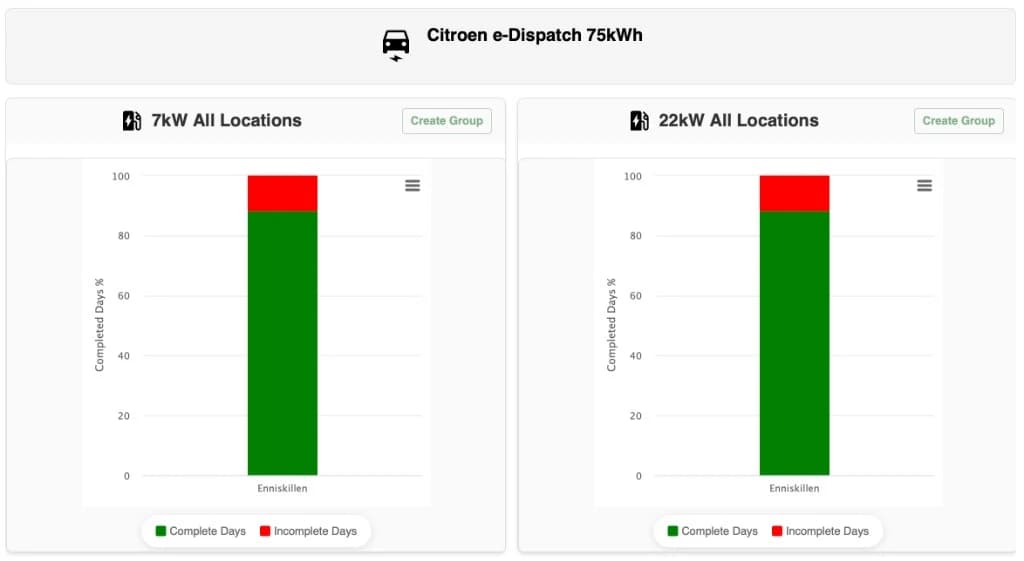
ZERO modelled the Citroën e-Dispatch 75 kWh against real duty cycles at both depots, comparing completed-day feasibility at 7 kW and 22 kW charging.
At Sheffield, 98% of duty cycles were already completed with a 7 kW charger. Moving to 22 kW produced virtually no improvement — confirming that dwell time was already sufficient and that incomplete days were not caused by slow charging.
At Enniskillen, 88% of duty cycles completed at 7 kW, and again 22 kW made very little difference. The remaining unsuccessful days were driven by occasional long journeys further from base. For those rare exceptions, public charging was identified as sufficient — avoiding the need to overbuild depot infrastructure for edge cases.
The Enniskillen result told the same story at a different operating radius: higher charger power was not the lever. Journey length on exceptional days was.
Infrastructure design and charging schedule
With vehicle feasibility understood, Dynamon designed charging infrastructure for each depot — specifying how many charge points were required and what grid demand charging the electric fleet would create on site.
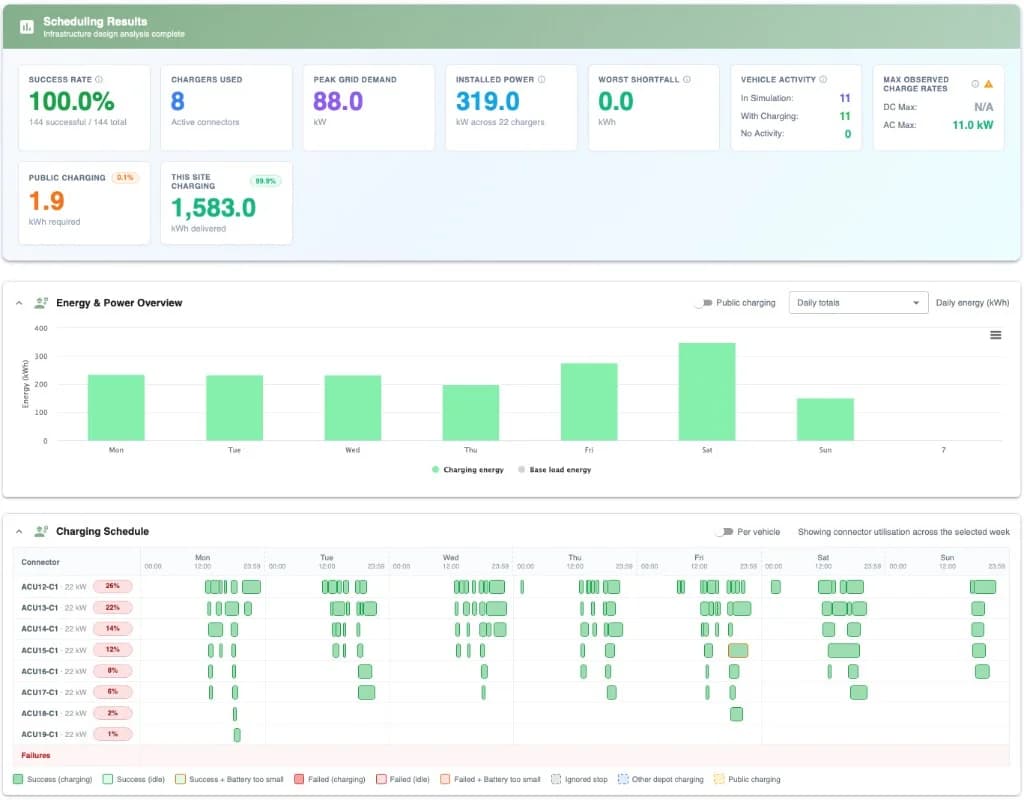
Because vehicles do not all need to charge simultaneously, ZERO constructed an optimised charging schedule that spreads load across available dwell. That meant a significantly smaller number of chargers than vehicles in the depot, lower peak grid demand, and a more cost-effective path to an electric fleet.
In the depot scheduling example below, 11 vehicles were supported with 8 active connectors, 100% duty success, peak grid demand held to 88 kW, and almost all energy delivered on site — with only a negligible share left to public charging for exceptional journeys.
The results
Royal Mail now has an evidence-based electrification plan for last-mile van operations at Enniskillen and Sheffield — grounded in Trimble telematics and structured through ZERO.
Both depots can electrify on 7 kW charging for the vast majority of duty cycles. Higher-power chargers offered little operational benefit because dwell was already sufficient; residual incomplete days are best handled with public charging on rare long journeys.
Depot infrastructure designs right-size charge-point counts and peak grid demand through optimised scheduling — giving Royal Mail a highly cost-effective specification for electric vans at these locations.
From Trimble telematics to vehicle feasibility, charger power and right-sized depot infrastructure, Dynamon and ZERO helped Royal Mail turn last-mile van electrification at Enniskillen and Sheffield into a practical, cost-effective plan.