
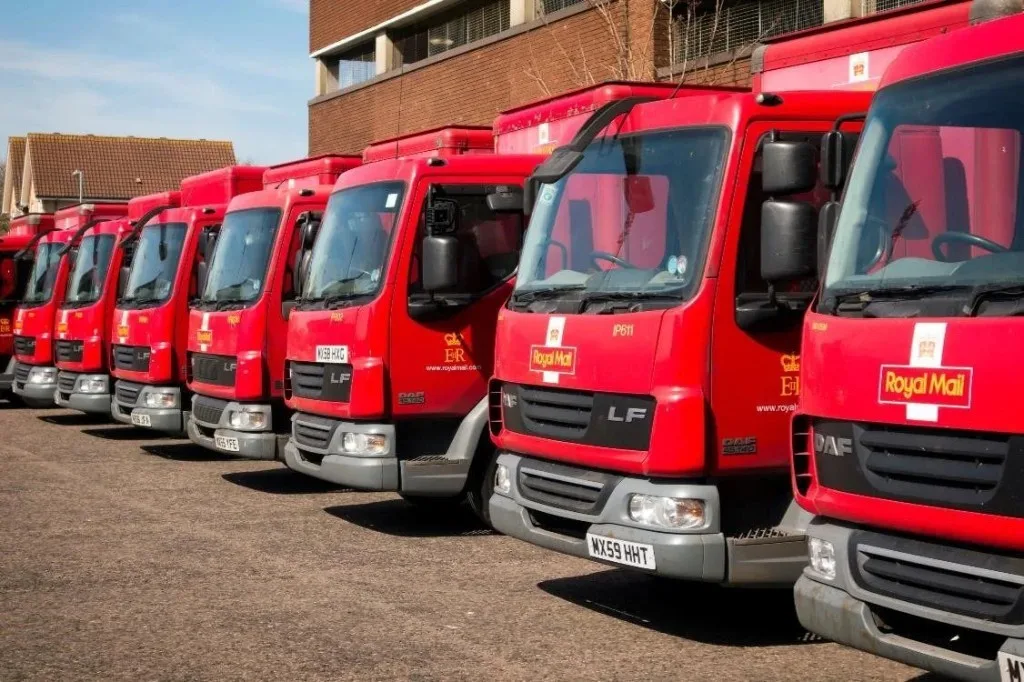
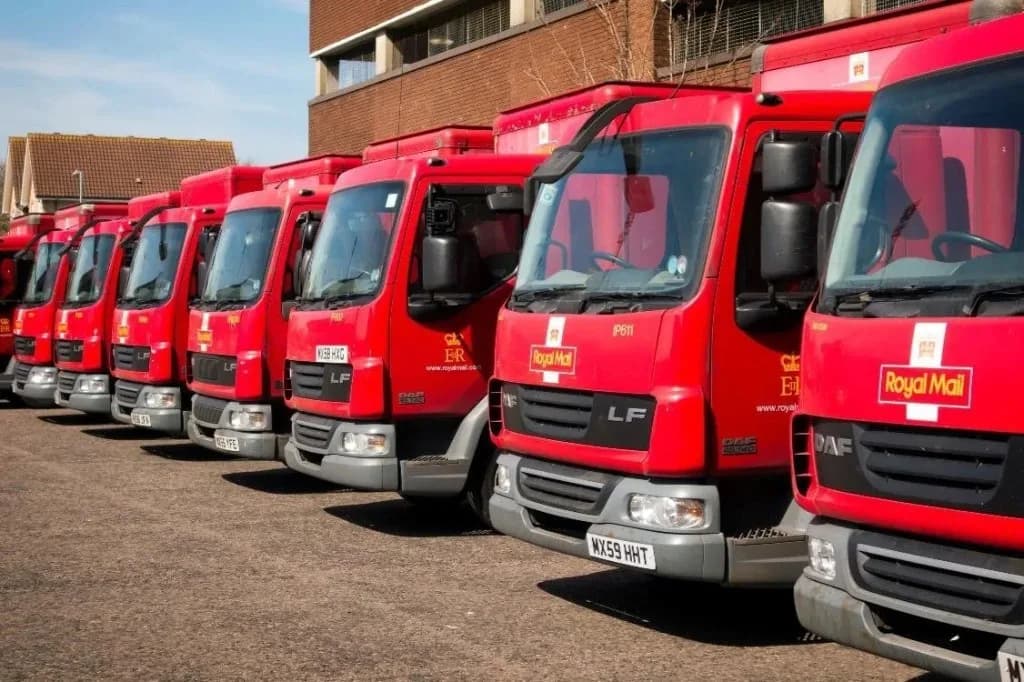
How Dynamon helped Royal Mail understand the feasibility of electrifying its 7.5-tonne mail centre fleet. Using historical Trimble telematics in ZERO, Dynamon’s decarbonisation analysis team assessed whether market-ready electric products — including the electric DAF — could replace diesel operations at Birmingham and Bristol Mail Centres, and what charging infrastructure those hubs would need.
In partnership with


Key outcomes
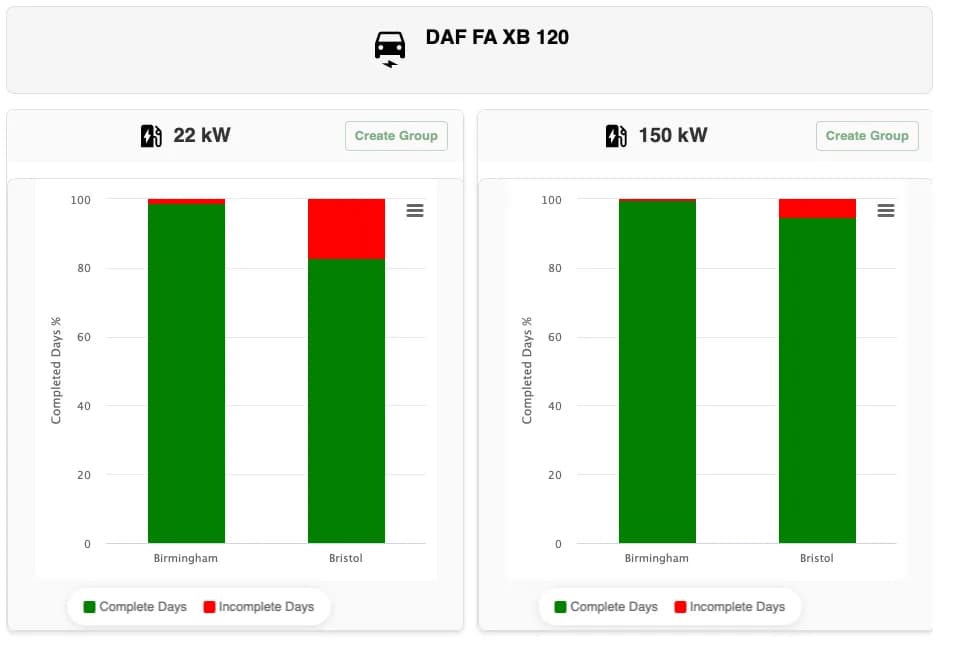
- Birmingham Mail Centre — 99% feasible at 22 kW and 100% at 150 kW with the standard DAF battery, showing dwell time and journey distances were well within capability.
- Bristol Mail Centre — feasibility rose from 83% at 22 kW to 95% at 150 kW; 9 of 12 vehicles (75%) can be electrified readily.
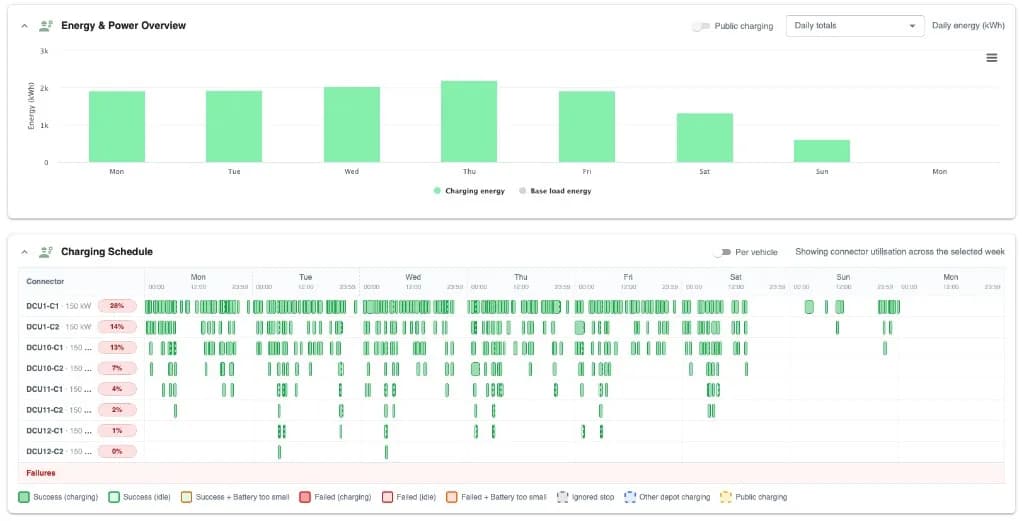
- Depot energy profiling — a detailed weekly charging schedule and optimised energy demand prediction, giving confidence in grid requirements and minimising unnecessary infrastructure spend.
- Investment underway — Royal Mail is now investing in vehicles and infrastructure to electrify these locations.
The challenge
Royal Mail needed to know whether its 7.5-tonne diesel fleet could be replaced by electric vehicles already available on the market — and what charging infrastructure those operations would require — before committing capital.
Mail Centres act as major hubs that distribute out to delivery offices across the network. The operations are highly repeatable day to day, which makes them strong candidates for electrification — provided the vehicles can cover the journey distances and charging can keep pace with dwell times at the depot and any satellite sites.
The question was not only whether an electric DAF could complete the work, but also which vehicles should transition first, what charging power was needed at each Mail Centre, and whether satellite charging would be required at delivery offices on the network.
The approach
Historical telematics data was collected from Royal Mail’s telematics provider, Trimble, and uploaded into ZERO — Dynamon’s whole-fleet decarbonisation analysis and planning software.
Dynamon’s decarbonisation analysis team ran a full vehicle feasibility study for the 7.5-tonne operation at two hubs: Birmingham Mail Centre and Bristol Mail Centre. The analysis tested whether existing EV products could replace diesel duty cycles, modelled charging at 22 kW and 150 kW, and assessed infrastructure requirements at the depot and at delivery offices where trucks travelled.
Because these hub operations are highly repeatable, once a vehicle and charging strategy prove feasible they can be rolled out with confidence that the same pattern will hold day in, day out.
Birmingham and Bristol operations
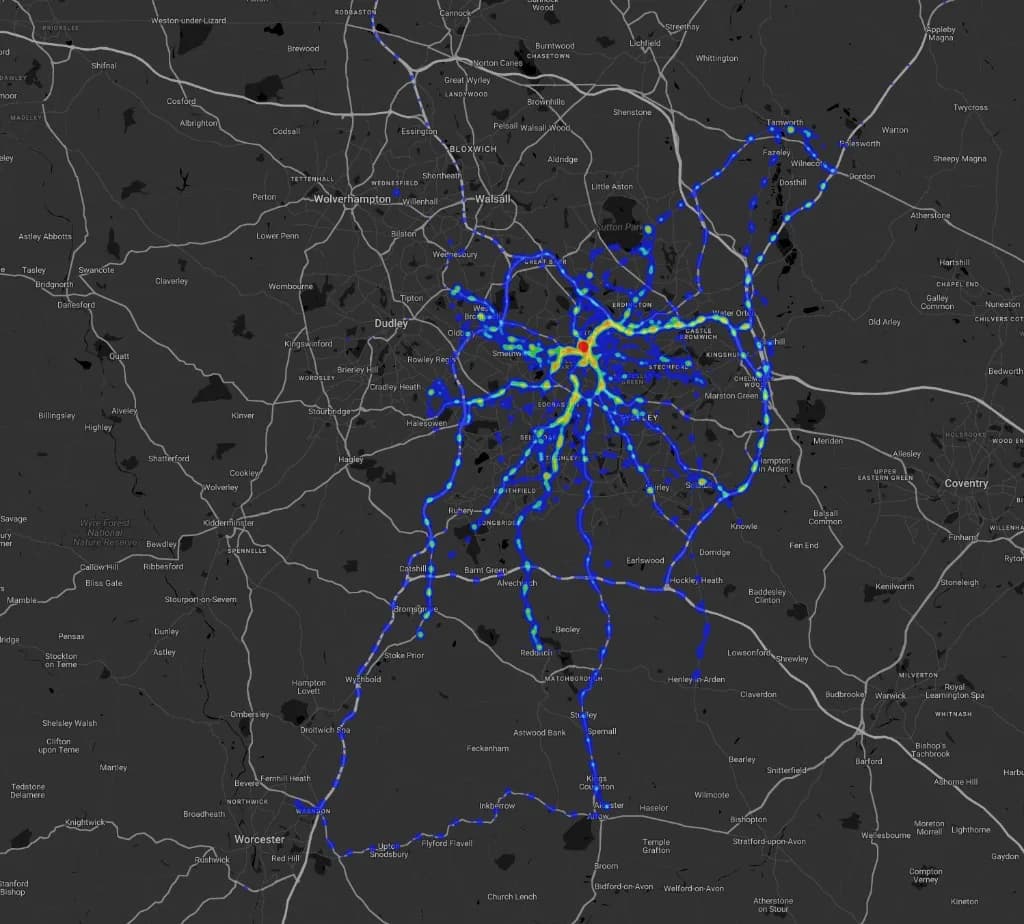
ZERO mapped how vehicles radiate from each Mail Centre to surrounding delivery offices. Birmingham’s network is relatively contained across the West Midlands, with strong dwell patterns that favour overnight depot charging.
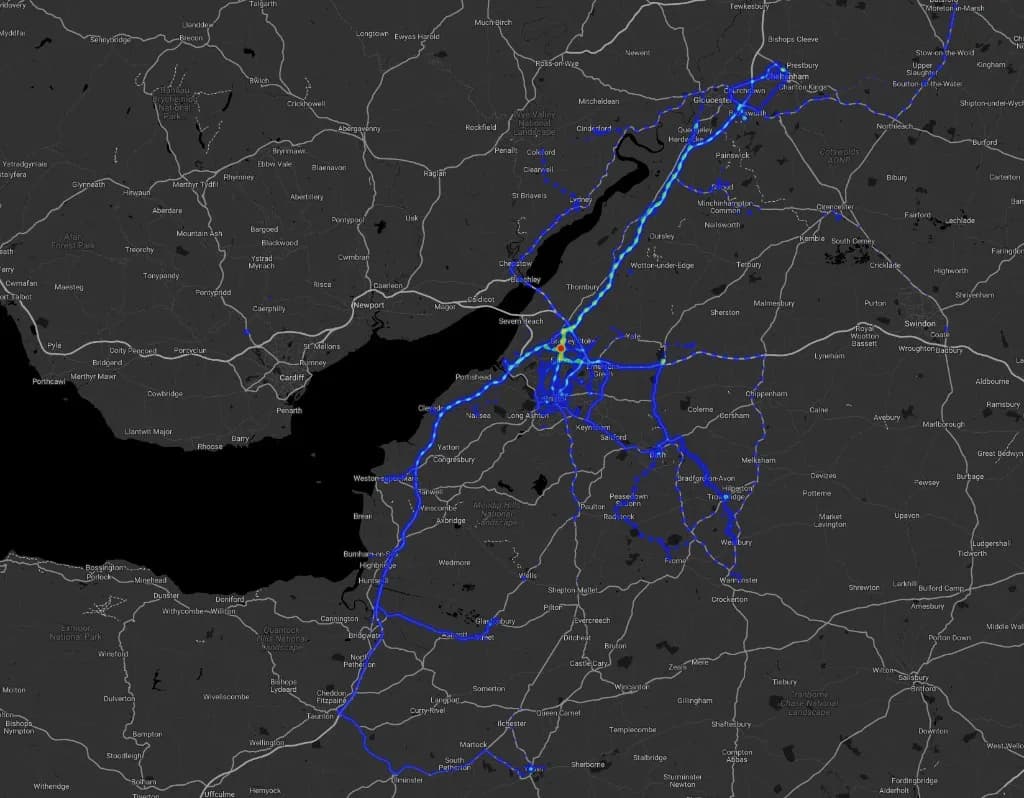
Bristol’s operation covers a much wider geography across the South West and into South Wales, with longer journey distances and tighter dwell windows at more remote locations — conditions that put more pressure on battery range and charging power.
The contrast between the two hubs shows why site-specific analysis matters: the same vehicle and charging specification can be highly feasible at one Mail Centre and more constrained at another.
Vehicle feasibility: 22 kW vs 150 kW
ZERO modelled the electric DAF FA XB 120 against real duty cycles at both Mail Centres, comparing completed-day feasibility at 22 kW and 150 kW charging.
At Birmingham Mail Centre, electrification was already highly feasible at 22 kW with the standard battery — 99% of days completed. Raising charging power to 150 kW only moved the result to 100%, confirming that dwell time was ample and journey distances sat well within the vehicle’s capability. Every vehicle operating at the centre was a strong candidate for transition.
At Bristol Mail Centre, longer journeys and more challenging dwell times made charging power a material lever. Feasibility rose from 83% at 22 kW to 95% at 150 kW. Remaining incomplete days were driven by long journey distances and short dwell times at the more remote locations Bristol serves. Of the 12 vehicles analysed, 9 — 75% of the fleet — can be electrified readily. The key principle: transition the vehicles that can do the job confidently, and focus further work on the remainder.
Energy demand and charging schedule
With charging power requirements understood, Dynamon produced a detailed energy demand prediction to inform grid capacity and any potential upgrades. ZERO profiled electricity demand across a full week, highlighting peak demand days and opportunities to spread load across the dwell times vehicles spent in the depot.
The output was a precise weekly charging schedule and an optimised energy demand forecast — giving Royal Mail confidence in the infrastructure required at the depot and helping minimise additional spend on chargers and grid works.
The results
Royal Mail now has a clear, evidence-based view of where its 7.5-tonne Mail Centre operations can electrify today — grounded in Trimble telematics and structured through ZERO.
Birmingham Mail Centre can electrify with confidence on 22 kW charging. Bristol Mail Centre needs higher-power charging for the majority of the fleet, with 9 of 12 vehicles ready to transition and a precise view of residual feasibility challenges.
Depot-level energy profiling and an optimised charging schedule give Royal Mail the infrastructure specification it needs — and the confidence to invest. Vehicles and charging infrastructure for these locations are now progressing.
From Trimble telematics to vehicle feasibility, charging power and depot energy demand, Dynamon and ZERO helped Royal Mail turn a complex electrification question into an investable plan for Birmingham and Bristol Mail Centres.