
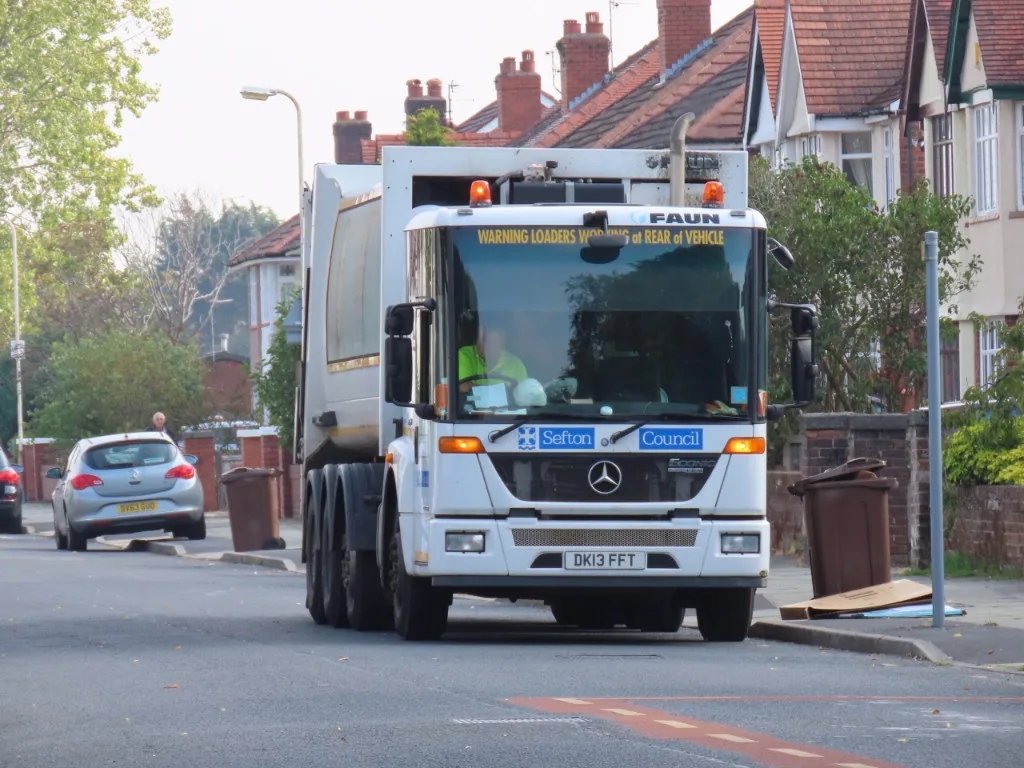
Sefton Council declared a climate emergency in 2019 and is working towards net zero for its own operations by 2030. The council asked Dynamon to test its cars, vans, rigids and refuse vehicles in ZERO before the next round of replacements, and to show what charging the depots need.
Customer

Key outcomes
- 219 vehicles analysed: 12 cars and SUVs, 100 vans, 60 rigids and 47 refuse collection vehicles. 64 had telematics, from Ctrack and Supatrack. The other 155 were modelled from average daily mileages.
- 222,420 miles across 8,390 duty cycles. The average day was 26 miles. The longest was 124. Every duty cycle was within electric range.
- 57% can move next. Mainly the cars and vans, once 7 kW charging is in place at Hawthorne Road. Heavier refuse vehicles need faster charging later.
What ZERO showed
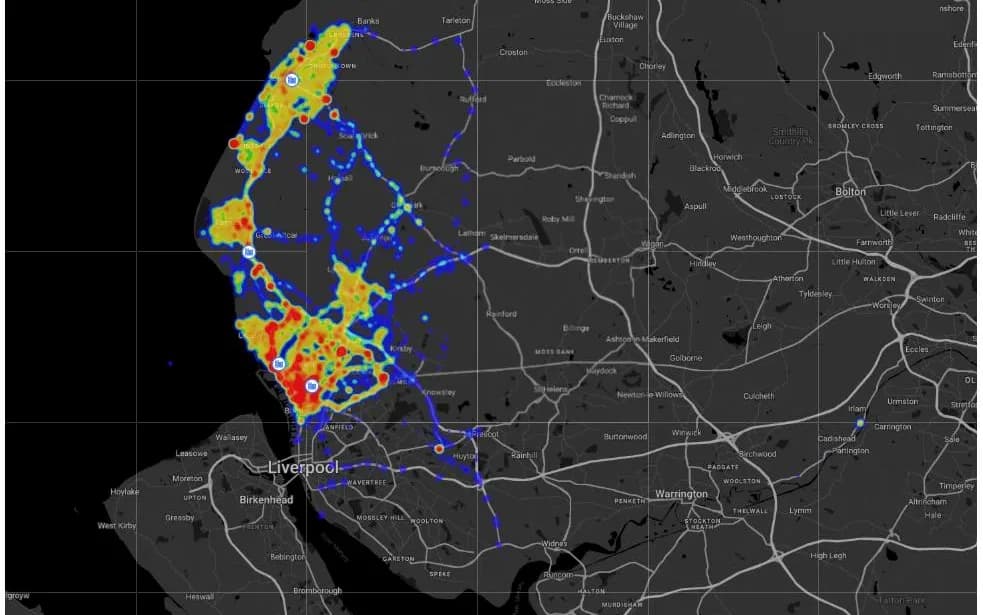
The work is local, mostly around Bootle and Crosby. ZERO registered 18 council locations. The main sites are Hawthorne Road, Cambridge Road, Formby and Tulketh Street. Real telematics covered 64 vehicles — 35 on Ctrack and 29 on Supatrack. For the vehicles without a telematics feed, duty cycles were built from average daily mileages supplied by the council, mostly from MOT records. Together that is 8,390 duty cycles and 222,420 miles.
Distance is not the constraint. With 7 kW charging at Hawthorne Road, vehicles that return there completed almost every recorded day, and raising charger power at that depot changed little, because the stops are already long and the mileage is low. The days that failed were the ones that never came back to Hawthorne Road to charge. Cars and panel vans are the first replacements. Rigids, and many of the refuse vehicles, can follow once faster charging is available at the depots they use. The heaviest refuse vehicles are the class that waits. The first installation at Hawthorne Road is a small bank of 7 kW chargers, about 13 connectors, with a grid study before anything larger is specified.
Ctrack and Supatrack records where they exist, MOT-based routes where they do not, and a charging plan for Hawthorne Road: that is what Dynamon prepared so Sefton Council can order electric cars and vans first, and plan the heavier vehicles once the depots can charge them.