

Dynamon is the UK’s leading HDV decarbonisation consultancy. For Transport Scotland’s Heavy Goods Vehicle Readiness Fund (phase 1), Dynamon delivered telematics-led EV feasibility analysis for seven HGV and HCV fleet operators across Scotland. Using ZERO, Dynamon analysed more than 582,000 miles of driving data and 3,600 individual duty cycles, then translated route-level electrification results into charging infrastructure requirements and practical transition plans each operator could act on.
Funded by
Powered by

Key outcomes
- 7 fleets analysed and 161 vehicles reviewed, spanning local distribution, tanker, bulk-waste, refrigerated and crane-equipped operations.
- 582,000+ miles of telematics data and more than 3,600 duty cycles modelled in ZERO against OEM electric HGV specifications.
- Up to 99% duty-cycle completion on mid-weight and heavy rigid trucks (12 to 32 tonnes) with depot-only charging.
- ~73% peak reduction through managed charging — from over 3,300 kW unmanaged to around 900 kW in the largest project, supporting 36 electric HGVs on six 150 kW DC chargers.
“Dynamon's analysis gave us a clear, route-by-route view of where electrification works today and where it doesn't, turning a broad decarbonisation ambition into a practical plan each operator can act on.”
Rodger Caldwell, Operations Manager, Cress Company
Fleets analysed
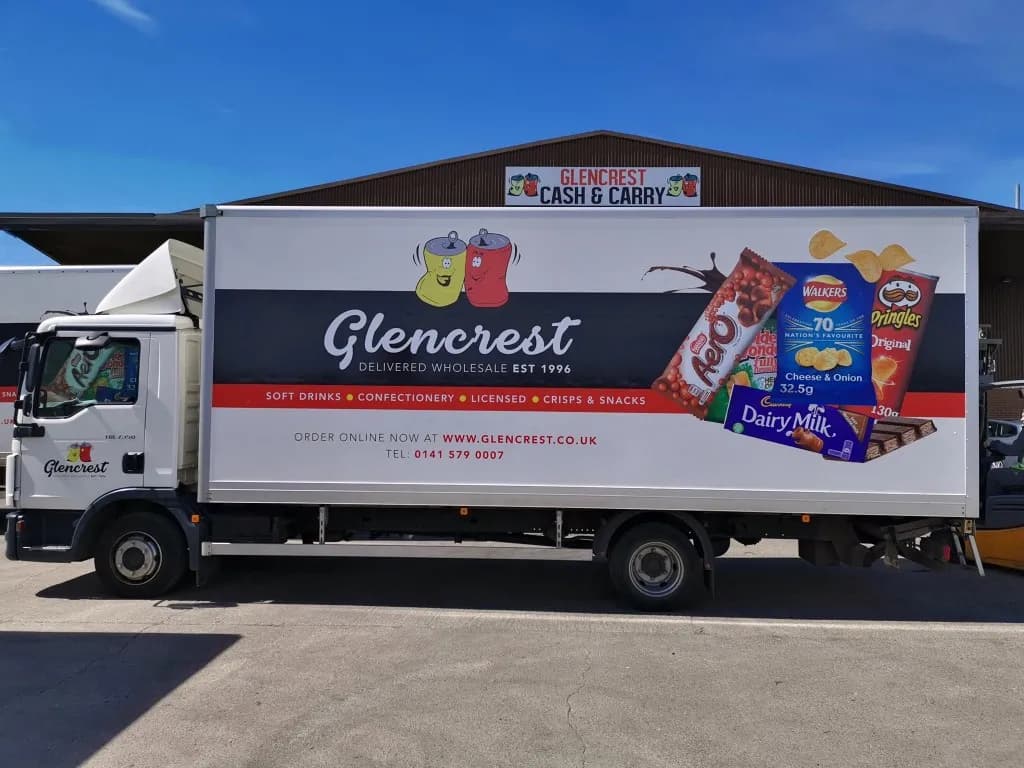
The programme covered seven operators spanning local multi-drop distribution, long-distance trunking, tanker and bulk-waste collection, refrigerated logistics and crane-equipped builders’ merchant deliveries:
- Cress Company (Dunfermline)
- Dunn
- Glencrest
- Sutherland Bros
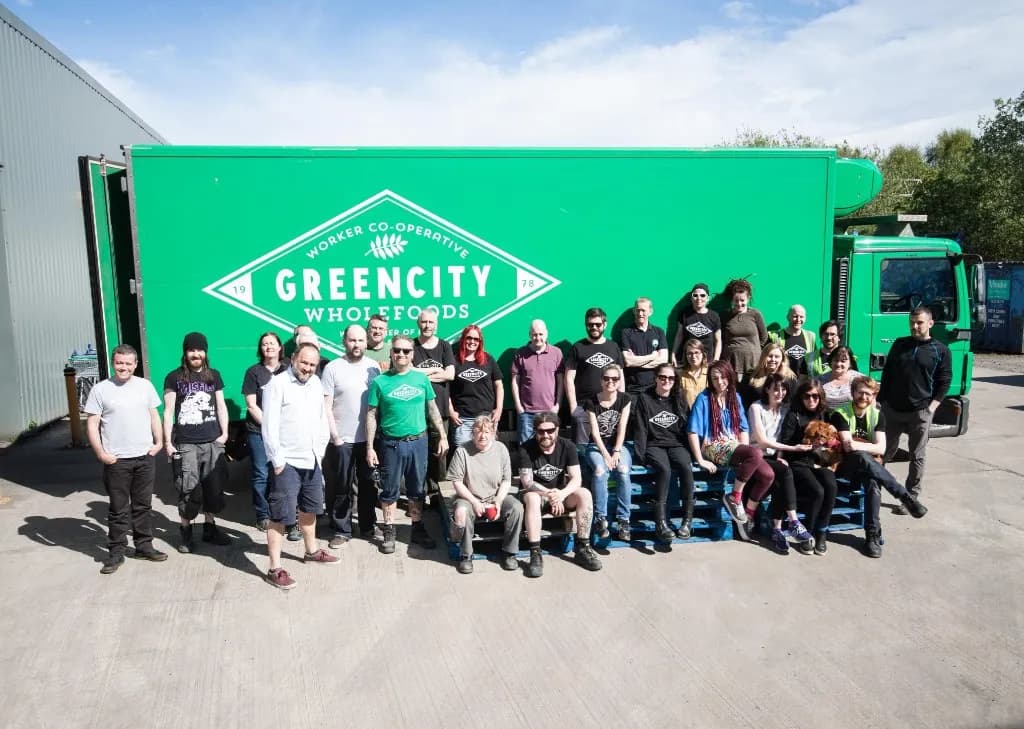
- Greencity Wholefoods
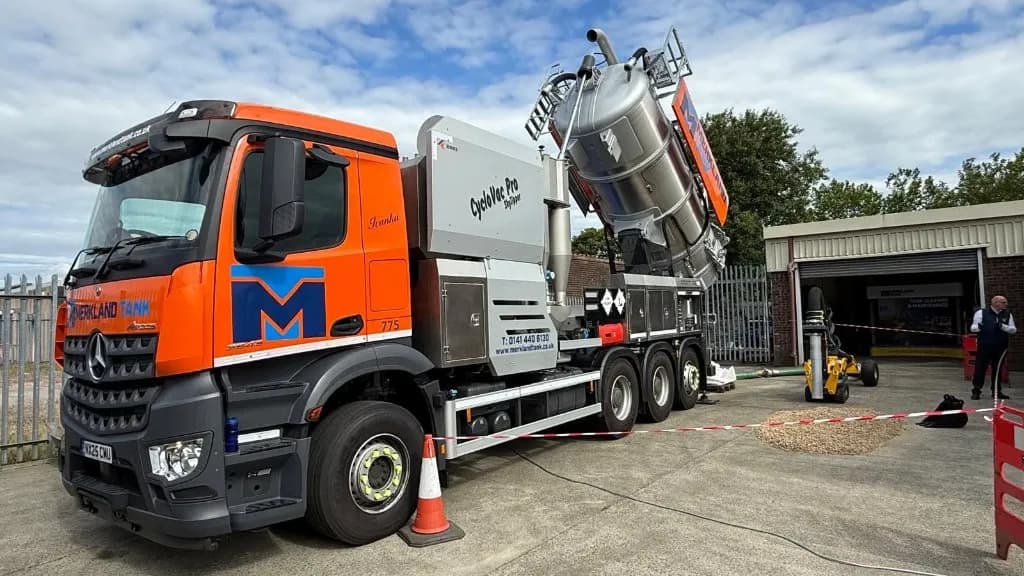
- Merkland Tank
- GPH Builders / Red Stag
The challenge
Fleet operators across Scotland face a complex transition to zero-emission vehicles while maintaining day-to-day operational performance, payload capacity and delivery reliability. HGV operations vary widely across that mix, and generic assumptions about HGV electrification rarely hold.
Understanding which vehicles can be electrified today, which routes an electric truck can realistically complete, how much charging infrastructure each depot needs, and what all of this means for grid capacity is essential to developing practical and affordable transition plans. Each operator needed answers grounded in their own operational data rather than manufacturer best-case figures.
The approach
Dynamon was engaged to deliver telematics-led EV feasibility analysis for the seven HGV and HCV operators using ZERO — Dynamon’s whole-fleet decarbonisation analysis and planning software.
For each fleet, Dynamon consolidated and analysed real-world telematics and TMS data, covering more than 582,000 miles of driving and over 3,600 individual duty cycles. Each vehicle and route was simulated against OEM electric vehicle specifications, covering classes from 7.5-tonne rigids through to 44-tonne tractor and trailer combinations, and including specialist bodies such as flatbed-and-crane rigids and refrigerated curtainsiders.
Every route was assessed under harsh-condition range assumptions, factoring in energy consumption, auxiliary equipment loads, dwell time at depot and realistic charging opportunity. Feasibility results were then translated into infrastructure requirements, with Dynamon modelling both unmanaged and managed charging scenarios at each depot to understand peak power demand, daily energy needs, and the number and rating of chargers required — including the grid implications of each option.
Participating operators were also able to explore transition scenarios, infrastructure options and rollout strategies through ZERO, supporting longer-term planning beyond the initial analysis.
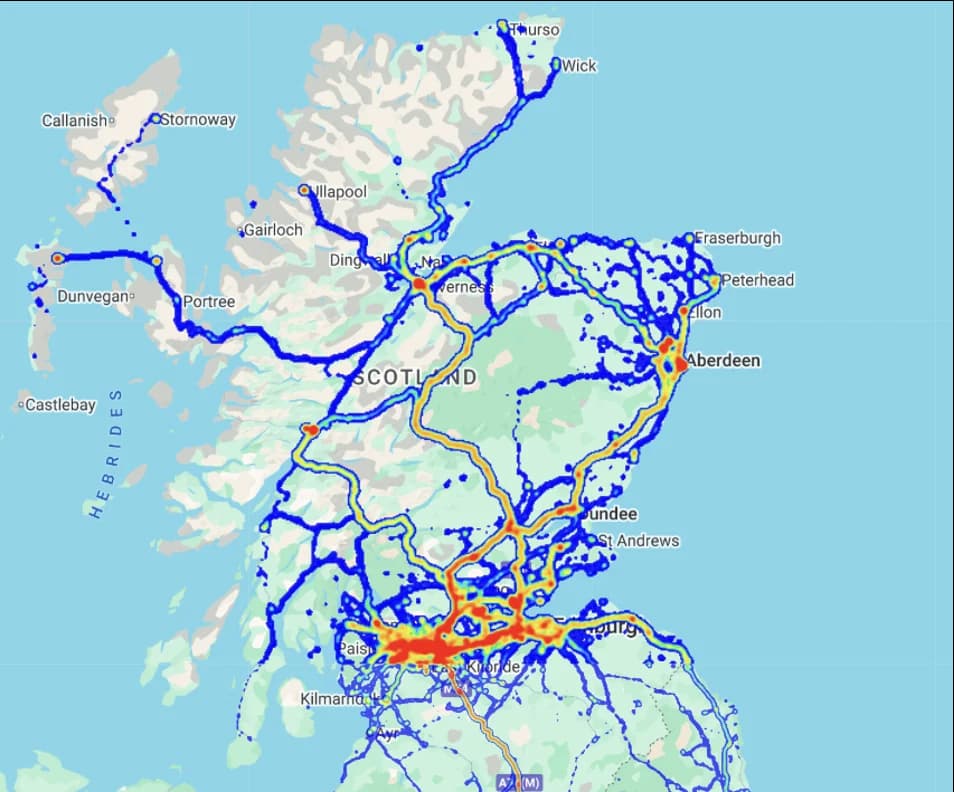
The telematics mapped a national logistics network rather than a single corridor: the strongest concentrations sit in the Central Belt, with further hubs around Aberdeen, Inverness and Dundee, and thinner routes running north into the Highlands and out to the islands. That geography matters for electrification. Low-mileage, high-frequency local distribution is well suited to depot charging, while longer regional and island-connected work is more route-dependent.
Vehicle feasibility
A consistent pattern emerged across the programme. Mid-weight and heavy rigid trucks (12 to 32 tonnes) were the strongest candidates for early electrification, with duty-cycle completion reaching as high as 97% to 99% under depot-only charging, including 26 to 32-tonne rigids on specialist crane and flatbed bodies.
Lighter 7.5-tonne vehicles were frequently payload-constrained once battery weight was accounted for, often requiring an upsize in vehicle class to preserve carrying capacity.
Long-haul 42 to 44-tonne tractor and trailer operations proved the most route-dependent. One high-mileage trunking operation was ruled out on current technology, while a lower-mileage regional operator reached 81% duty-cycle completion, rising to 86% once a small number of overnight charging points were added along the route.
Low-mileage, high-frequency local distribution routes consistently emerged as the best early-adopter candidates, regardless of fleet size or sector.
Infrastructure and managed charging
Infrastructure modelling told an equally consistent story. Managed charging dramatically reduced the peak power and hardware needed at every depot.
In the largest project, moving from unmanaged to managed charging cut peak demand from over 3,300 kW to around 900 kW, enabling 36 electric HGVs to be supported by just six 150 kW DC chargers, without triggering a major grid upgrade.
Smaller fleets saw the same principle hold at a different scale, with charger-sharing and dynamic load management consistently reducing the infrastructure footprint compared with a one-charger-per-vehicle approach.
The results
Dynamon delivered detailed, route-level electrification plans for all seven fleets, providing a robust evidence base for vehicle replacement, charging infrastructure deployment and grid connection planning.
Each operator now has a clear, deliverable transition plan: which vehicles to electrify first, which to hold on alternative fuels in the near term, and what charging infrastructure each depot will need. Collectively the programme demonstrates a repeatable, data-led route to HGV fleet decarbonisation across Scotland.
From 582,000 miles of telematics to vehicle feasibility, managed charging and depot energy demand, ZERO turned a nationwide HGV decarbonisation ambition into practical plans seven Scottish operators can act on today.