
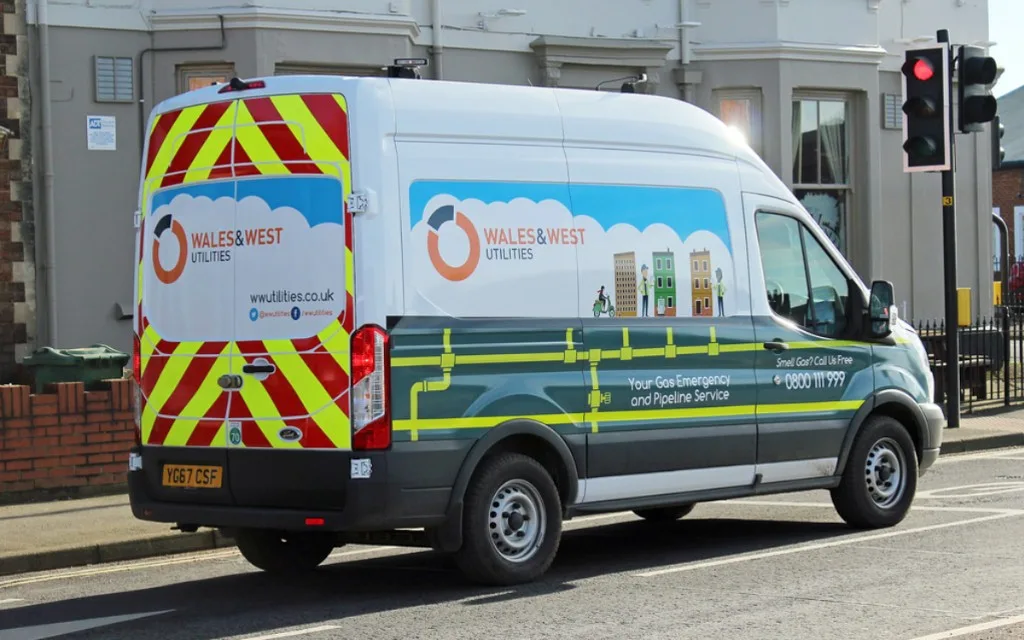
Wales & West Utilities needed a realistic view of which light commercial vehicles could switch to electric, including the days when an engineer is sent a long way from base. Dynamon collected 1 million miles of historical telematics for 310 vehicles across 22 locations, via API from the fleet’s telematics provider, and used ZERO to simulate a medium panel van with a 75 kWh battery and a large panel van with a 110 kWh battery. The model covered home charging and depot charging, harsh weather, and whole-life battery degradation.
Customer

Key outcomes
- 310 vehicles across 22 locations, with 1 million miles of historical telematics collected via API from the fleet’s telematics provider.
- 75 kWh and 110 kWh medium and large electric panel vans simulated in ZERO against the recorded duty cycles.
- Home and depot charging modelled together, with harsh weather applied to battery and charging performance and whole-life degradation included.
- Routine and incident response both have to be planned for: a significant proportion of the fleet is feasible, but long incident-response journeys mean not every van can switch.
The challenge
A utilities fleet is not one kind of journey. Much of the work is routine and local. Some of it is incident response, when a vehicle may be sent a long distance at short notice. An electric van has to be judged against both, and the charging pattern changes again if vehicles go home with engineers overnight rather than returning to a depot.
Wales & West Utilities needed that answer from its own operation: which vehicles, and which battery size, can cover the recorded work once weather and battery ageing are taken into account.
The approach
Dynamon collected historical telematics for 310 vehicles based at 22 locations — 1 million miles — through an API from the fleet’s telematics provider. In ZERO, those duty cycles were replayed against two electric light commercial vehicles: a medium panel van with a 75 kWh battery and a large panel van with a 110 kWh battery.
Charging was modelled at home and at the depot, matching the way the operation actually parks. Harsh weather was applied to battery range and to charging performance, and the simulation included whole-life degradation, so the result was not a new battery on a mild day.
The results
A significant proportion of the fleet was feasible for electrification on the journeys already being run. The limit is the character of utilities work. The same fleet also completes a significant number of long journeys for incident response, and those trips make it unrealistic to treat every vehicle as ready to switch.
The electrification plan therefore has to serve both patterns: routine short journeys, where a right-sized electric van with home or depot charging can already do the work, and occasional long incident-response journeys, which still need a vehicle and a charging approach that can cope.
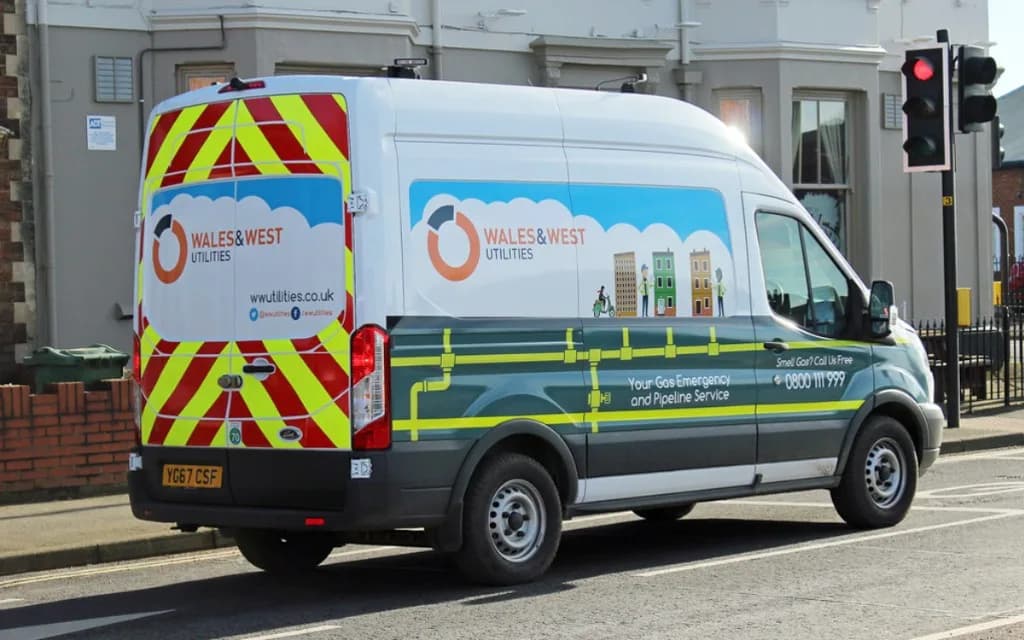
One million miles of telematics, two battery sizes, and charging at home and at the depot: ZERO showed where electric vans already fit Wales & West Utilities, and where incident response still sets the limit.