
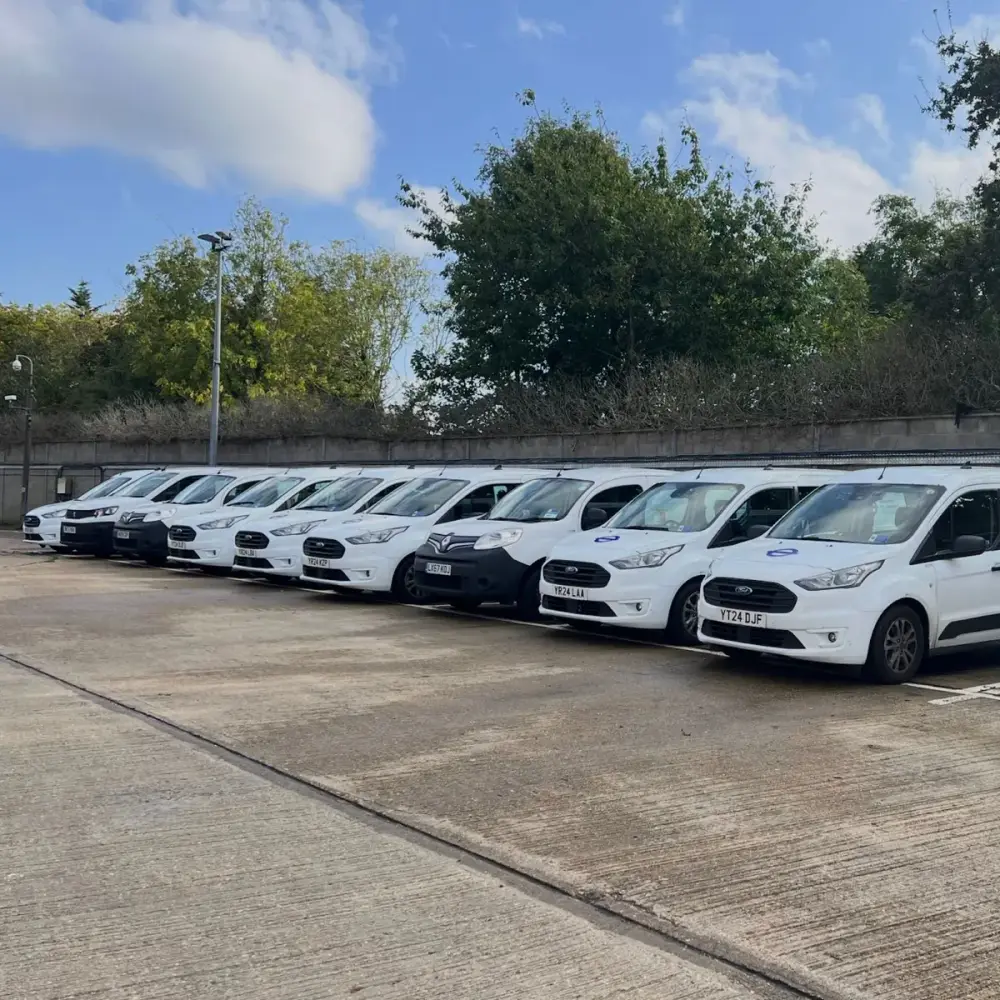
Transport for London’s engineering service fleet — approximately 962 vehicles — needed a data-driven plan to reach zero-emission vehicles by 2030. Dynamon’s ZERO software analysed 12 months of telematics across 356 sites to recommend EV options, charging infrastructure at 36 primary locations, and a managed charger strategy that could save up to £1.2 million.
Key outcomes
- £1.2M potential savings by cutting required chargers from 227 (minimally managed) to 107 (fully managed) across 36 primary sites.
- 57% of the analysed fleet could transition to EVs with minimal operational changes (50% green, 7% amber).
- 25% reduction in reliance on public charging — with 90% of green and amber vehicles able to run on TfL infrastructure alone.
The challenge
TfL is developing proposals to transition its fleet to zero-emission vehicles (ZEVs) by 2030. With approximately 962 vehicles operating across dozens of sites in London, varied driving patterns across a broad operational landscape make the EV transition complex.
TfL needed to plan and identify efficient charging locations without over-specifying infrastructure — while maintaining reliable support for maintenance and operational activities, including night work and emergency response. The planning process had to integrate ZEVs carefully to protect service quality and manage costs.
The solution
Dynamon’s ZERO software analysed TfL’s vehicle telematics data — provided by Teletrac Navman — and operational patterns over a 12-month period. ZERO assessed vehicle movements and dwell times across 356 locations — depots, Tube stations, offices and bus stations — to identify optimum EVs and optimise EV charger installation.
Because TfL’s support fleet operates across a diverse network, the analysis focused on dedicated fleet-specific charging infrastructure on TfL sites rather than relying on publicly available chargers.
ZERO classified analysed vehicles into three tranches: green vehicles (50%) suitable for immediate electrification with infrastructure at key locations and no schedule or route changes; amber vehicles (7%) that could electrify with minor adjustments; and red vehicles (43%) that present greater challenges and need further operational or charging solutions.
London operations from telematics
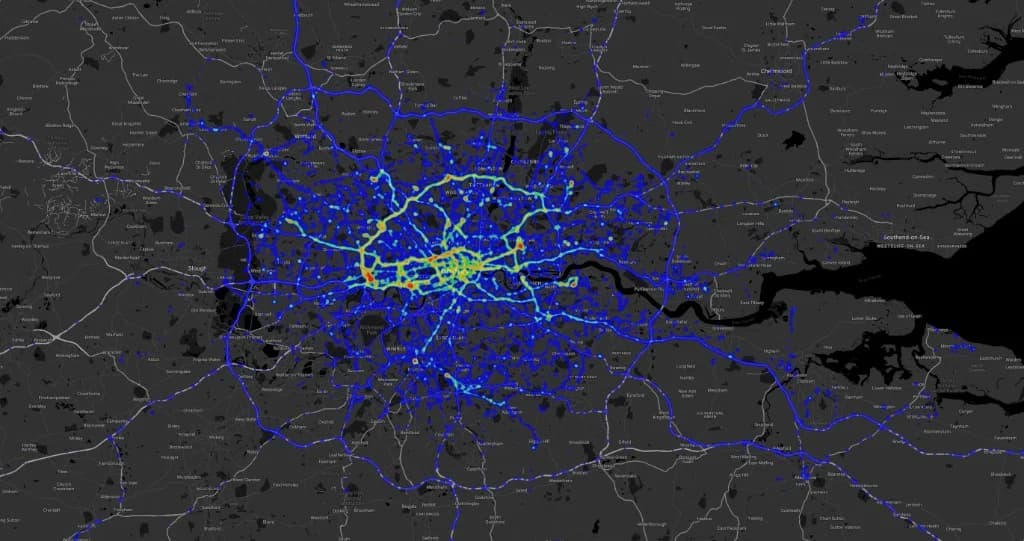
ZERO mapped telematics data provided by Teletrac Navman across Greater London, showing dense fleet activity concentrated in Central London and along key arterial corridors, with coverage extending out to the M25 and beyond towards Slough, Chelmsford and Southend-on-Sea.
That geographic pattern informed where charging infrastructure would have the most impact — focusing investment on the high-intensity sites and corridors that dominate the service fleet’s day-to-day operation.
The outcomes
ZERO recommended a mix of EV battery sizes — 45 kWh, 65 kWh and 113 kWh — by vehicle tranche, and proposed smaller battery sizes for 255 vehicles, with potential cost savings of up to £1 million (around 20%) from rightsizing batteries.
Of 356 sites analysed, ZERO identified 36 primary locations for charging infrastructure. Under a minimally managed approach, TfL would need 179 × 22 kW and 48 × 50 kW chargers (227 total). A fully managed site solution reduced this to 64 × 22 kW and 43 × 50 kW chargers (107 total) for green and amber vehicles — a 43% reduction in charger numbers, potentially saving up to £1.2 million, with charger-sharing strategies improving utilisation by around 35%.
ZERO’s recommendations could reduce reliance on public chargers by 25%, ensuring that 90% of green and amber vehicles could operate solely using TfL’s charging infrastructure.
Recommendations for red vehicles
The remaining 43% of the analysed fleet would require significant rerouting or operational changes. Dynamon recommended:
- Assign vehicles to sites they visit most often, or to underutilised sites, to avoid grid congestion at core locations.
- Introduce public charging for red vehicles operating outside London, covering around 33% of their energy needs.
- Equip vehicles with larger batteries (e.g. 113 kWh) to minimise charging frequency and reduce downtime.
- Install home chargers where vehicles are taken home by employees.
- Review routes for high-feasibility vehicles and examine parking and work locations for low-feasibility ones.
By focusing on 36 primary sites and a managed infrastructure rollout that minimises oversupply, ZERO gave TfL precise, cost-effective electrification insights — covering vehicle choice, charging patterns and infrastructure needs for a confident path to a zero-emission service fleet.