
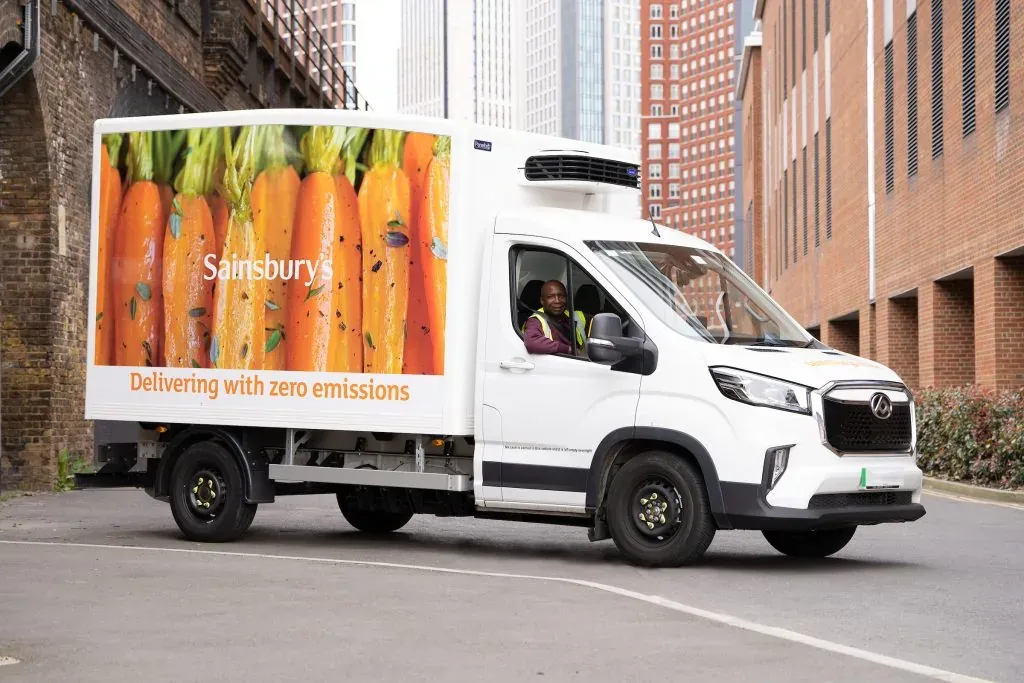
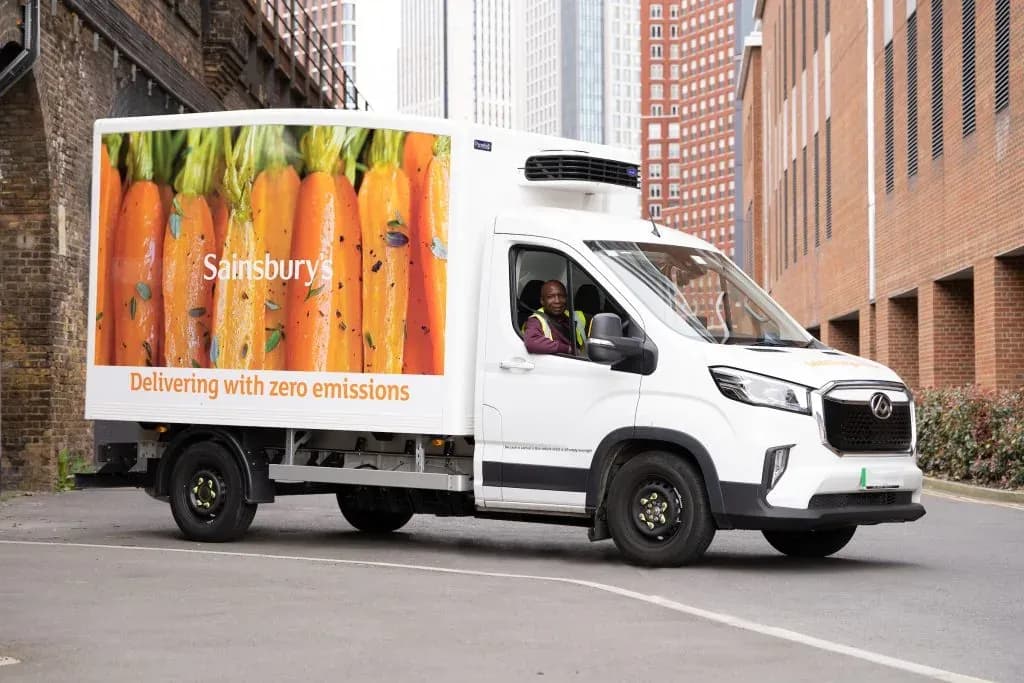
Sainsbury’s wanted to know if electric vans could run home grocery deliveries from a new fulfilment centre in Bristol, before the site opened and before any vehicles had been ordered. ZERO tested two planned operating scenarios against real driving from the Bristol area.
Customer

Powered by

Key outcomes
- Before the site opened No telematics existed for the new depot. ZERO applied real Bristol driving to two planned ways of running the same daily grocery volume.
- Battery size decided which rounds could go electric. Daytime charging at the depot, including a step up from 22 kW to 50 kW, did not complete extra routes.
- A blended fleet Smaller and larger batteries, with diesel kept for the longest rounds. Journeys ran up to around 200 km, so one van specification does not fit the depot.
The challenge
The Bristol fulfilment centre was not yet operational, so there was no history of how vans would leave, deliver and return. Rounds run from short urban drops to journeys of around 200 km, and in both plans most vans stay out for the shift, with little chance to top up between drops.
A store network that is already running is a different problem. That study is Asda’s home-delivery fleet. Bristol had to be planned from routing scenarios, because the depot did not yet exist.
The approach
Sainsbury’s supplied two ways of doing the same daily delivery volume. One spread the work across more vehicles. The other used fewer vans, working harder, which also meant fewer drivers.
ZERO took telematics from a small number of vehicles already operating in the Bristol area and applied that driving to each planned route. No van had been chosen, so every vehicle was modelled as a generic 3.5-tonne electric van. A route counted as feasible only if the van got back with charge left, judged on winter range.
What ZERO found
Battery size moved the result. Daytime charging at the depot barely did, because the vans were away from base when a top-up would have helped. Raising it from 22 kW to 50 kW completed no extra routes. Even batteries of around 100 kWh left the longest routes unfinished, and the harder-worked scenario left less of the work inside electric range.
The spread of distances suits a mix: smaller batteries on the short urban rounds, larger batteries on the middle distances, and diesel kept for the routes that cannot be finished from the depot. More vehicles means more of the work can go electric. Fewer vehicles means a smaller fleet and fewer drivers. If the aim is electric miles, the evidence points to the first.
Charging
Vans leave on staggered shifts and the depot fills overnight, so the site does not need a charge point for every van if the schedule is managed. The useful mix is mostly slow AC chargers, with a small number of faster chargers. Fast DC charging at the depot did not change which routes could be completed.
Where a van would need to charge on the road, 22 kW can add more than two hours to a shift. At 50 kW and above, the extra time stays under an hour. Full electrification means redrawing those long rounds, or charging away from the depot.
Battery size, not charger power, decides which Bristol rounds can switch. A blended fleet fits the operation as it was planned, and the rounds that stay on diesel are visible before a van is ordered.